


Digital Transformation Guide
Digital Transformation Roadmap:
Step-by-Step Framework to Scale Your Business
Transform manual operations into scalable systems with a proven roadmap used by modern businesses to reduce costs, increase efficiency, and accelerate growth.
- Reduce manual work by up to 60%
- Build scalable systems with automation & AI
- Get a clear implementation plan in 4 phases
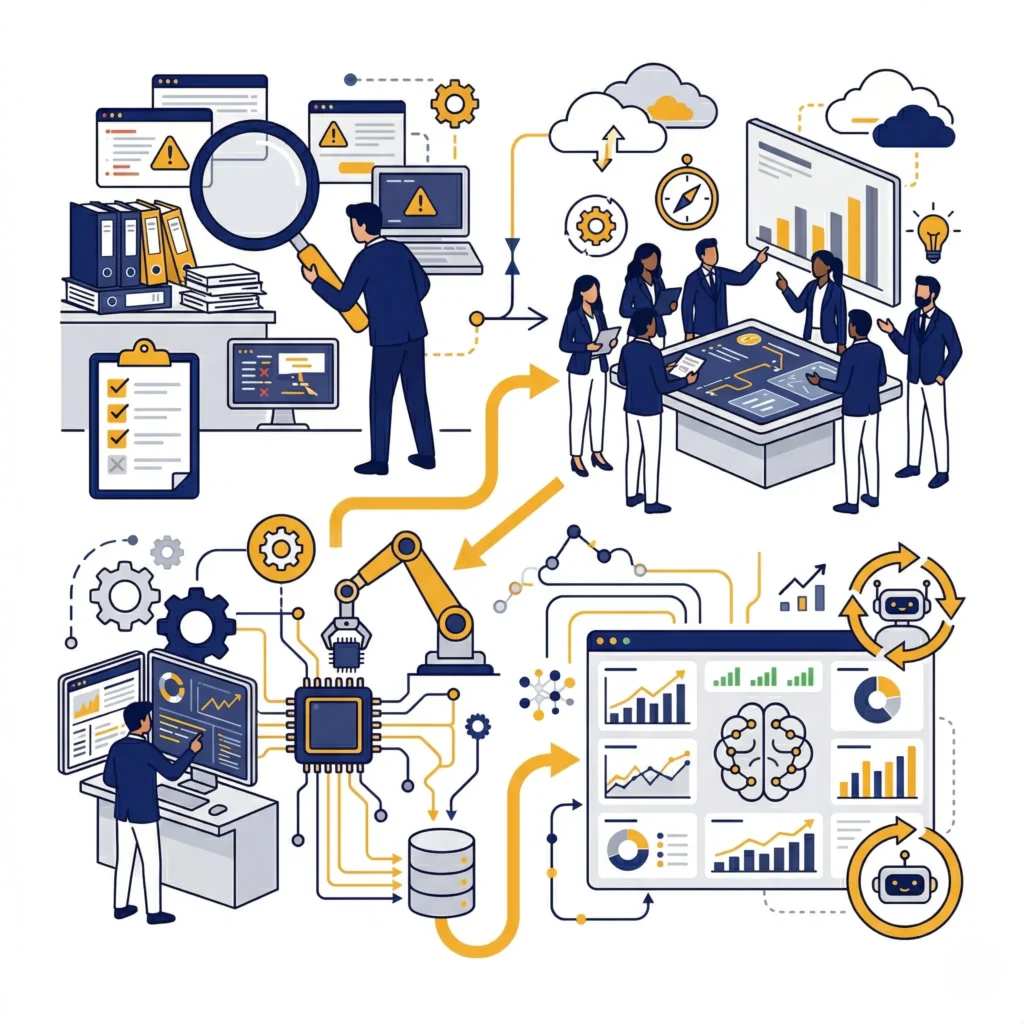
Digital transformation is no longer optional for modern businesses. As markets become more competitive and technology-driven, companies that rely on manual processes, disconnected systems, or outdated tools often struggle to scale, compete, and deliver consistent results. A clear and structured approach is required to transition from traditional operations to efficient, data-driven systems.
A digital transformation roadmap provides that structure. It acts as a strategic guide that helps businesses identify gaps, prioritize improvements, and implement the right technologies in a phased and manageable way. Instead of making random technology decisions, a roadmap ensures every step aligns with long-term business goals, operational efficiency, and measurable outcomes.
In this guide, we will break down the complete digital transformation roadmap process, including its key phases, real-world applications, common mistakes, and expected ROI. Whether you’re a growing business or an established company, understanding this roadmap will help you make smarter decisions—or work with the right digital transformation services to accelerate your journey.
What Is a Digital Transformation Roadmap?
A digital transformation roadmap is a structured, step-by-step plan that helps businesses transition from manual, outdated, or disconnected processes to modern, automated, and scalable digital systems. It defines how an organization will adopt technologies such as cloud platforms, APIs, automation tools, and AI to improve efficiency, reduce costs, and enhance overall performance.
Rather than implementing technology randomly, a roadmap provides clear direction by outlining priorities, timelines, and measurable goals. It ensures that every digital initiative aligns with business objectives, operational needs, and long-term growth strategies.
For companies looking to streamline workflows and scale efficiently, a well-defined roadmap acts as the foundation for successful transformation—especially when supported by the right business automation solutions and implementation strategy.
Why Businesses Need a Digital Transformation Roadmap
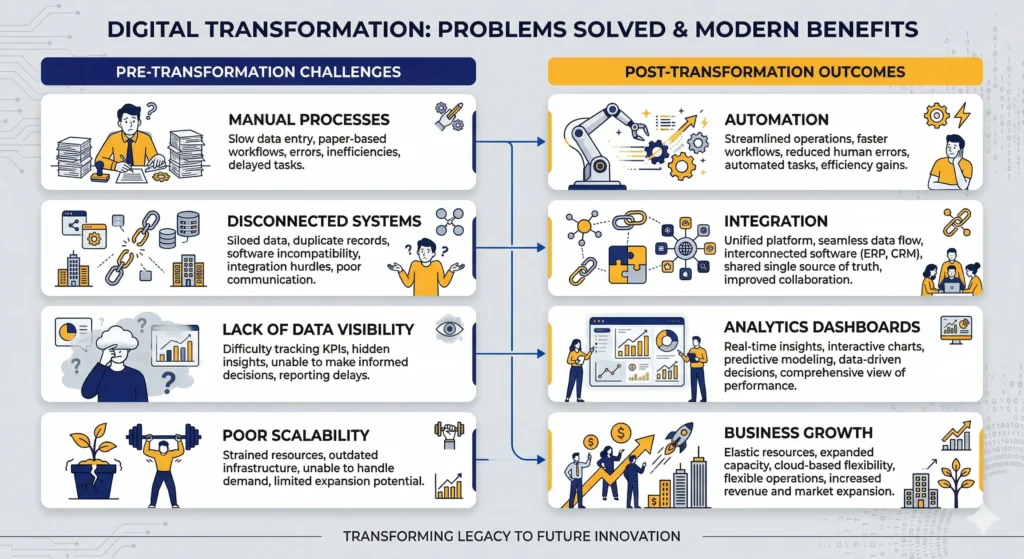
In today’s fast-moving digital landscape, businesses that rely on manual processes or disconnected systems often face inefficiencies, delays, and limited scalability. Without a clear plan, adopting new technologies can become chaotic, leading to wasted resources, poor integration, and minimal return on investment.
A digital transformation roadmap eliminates this uncertainty by providing a structured path forward. It helps organizations identify operational gaps, prioritize improvements, and implement the right technologies in a logical sequence. Instead of reacting to problems, businesses can proactively design systems that support growth, automation, and long-term efficiency.
Here are the key reasons why a transformation roadmap is essential:
1. Eliminates Inefficiencies in Operations
Manual workflows, repetitive tasks, and outdated tools slow down productivity. A roadmap helps identify these inefficiencies and replace them with streamlined, automated processes using modern business automation solutions.
2. Connects Disconnected Systems
Many businesses use multiple tools that don’t communicate with each other. A roadmap ensures proper API integrations and system connectivity, creating a unified workflow across departments.
3. Improves Decision-Making with Data
Without proper data visibility, decision-making becomes guesswork. A transformation roadmap introduces dashboards and analytics systems that provide real-time insights for better strategic decisions.
4. Supports Scalable Business Growth
As businesses grow, their systems must evolve. A roadmap ensures that infrastructure, software, and workflows are designed to scale efficiently without constant rework or technical limitations.
5. Reduces Costs and Increases ROI
Unplanned digital adoption often leads to overspending. A structured roadmap focuses on high-impact changes first, helping businesses reduce operational costs while maximizing returns from technology investments.
Digital Transformation Roadmap: 4 Essential Phases
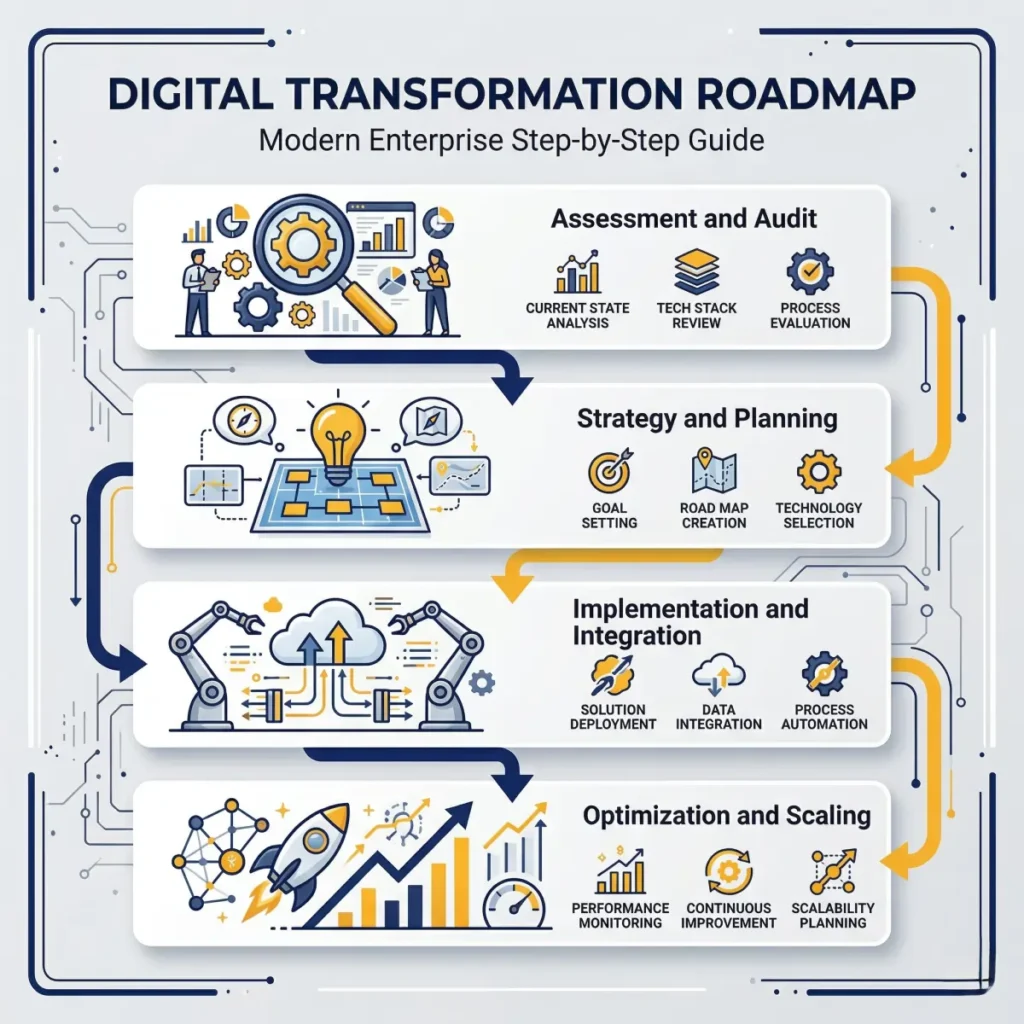
A successful digital transformation doesn’t happen overnight. It requires a structured, step-by-step approach that aligns business goals with the right technologies and execution strategy. A well-defined roadmap breaks this journey into clear phases, ensuring every step delivers measurable value and minimizes risk.
Below is a proven 4-phase digital transformation roadmap used by modern businesses to streamline operations, improve efficiency, and scale sustainably.
Phase 1: Assessment & Audit
The first step in any transformation is understanding your current systems, workflows, and operational challenges. This phase focuses on identifying inefficiencies, bottlenecks, and gaps that limit business performance.
Key Actions:
- Analyze existing tools and systems
- Map current workflows and processes
- Identify inefficiencies and manual tasks
- Evaluate data flow and system dependencies
Deliverables:
- System audit report
- Process flow mapping
- Opportunity and gap analysis
Phase 2: Strategy & Planning
Once gaps are identified, the next phase is to design a clear transformation strategy. This includes selecting the right technologies, defining priorities, and aligning transformation efforts with business objectives.
Key Actions:
- Define transformation goals and KPIs
- Select appropriate technologies (cloud, automation, AI)
- Prioritize high-impact improvements
- Create an implementation timeline
Deliverables:
- Digital transformation blueprint
- Technology stack selection
- Roadmap timeline and milestones
Phase 3: Implementation & Integration
This phase focuses on executing the strategy by deploying systems, integrating tools, and automating workflows. It is where planning turns into real business impact.
Key Actions:
- Implement selected technologies
- Build and deploy custom systems where required
- Integrate tools using APIs and automation platforms
- Test and validate workflows
Deliverables:
- Integrated digital systems
- Automated workflows
- Functional testing reports
Phase 4: Optimization & Scaling
Digital transformation is not a one-time process. After implementation, continuous monitoring and optimization are required to improve performance and scale operations efficiently.
Key Actions:
- Monitor system performance and KPIs
- Optimize workflows and automation processes
- Train teams for adoption and efficiency
- Expand digital capabilities for scaling
Deliverables:
- Performance dashboards
- Optimization reports
- Scaling strategy and future roadmap
Digital Transformation Roadmap vs Implementation Plan
While often used interchangeably, a digital transformation roadmap and an implementation plan serve different purposes. Understanding this difference is crucial for businesses aiming to execute transformation successfully without confusion or misalignment.
A digital transformation roadmap focuses on the overall strategy, direction, and long-term goals of transformation. In contrast, an implementation plan defines the detailed steps required to execute that strategy.
Here’s a clear comparison to help you understand both:
A successful digital transformation requires both a roadmap and an implementation plan. The roadmap defines where you want to go, while the implementation plan defines how you get there. Businesses that focus only on execution without a clear roadmap often face inefficiencies, delays, and poor ROI.
Digital Transformation Roadmap Example
To better understand how a digital transformation roadmap works in practice, let’s look at a real-world scenario.
Industry: Logistics & Supply Chain
Problem
A mid-sized logistics company was relying on manual reporting, disconnected tracking systems, and spreadsheet-based operations. This led to delays in reporting, lack of real-time visibility, and inefficient decision-making across departments.
Solution: Applying the 4-Phase Roadmap
Phase 1: Assessment & Audit
The company’s existing systems were analyzed to identify workflow inefficiencies, data silos, and reporting bottlenecks. Key gaps in operational visibility were documented.
Phase 2: Strategy & Planning
A transformation strategy was designed, focusing on cloud-based tracking systems, centralized data dashboards, and automated reporting workflows. Clear KPIs and timelines were established.
Phase 3: Implementation & Integration
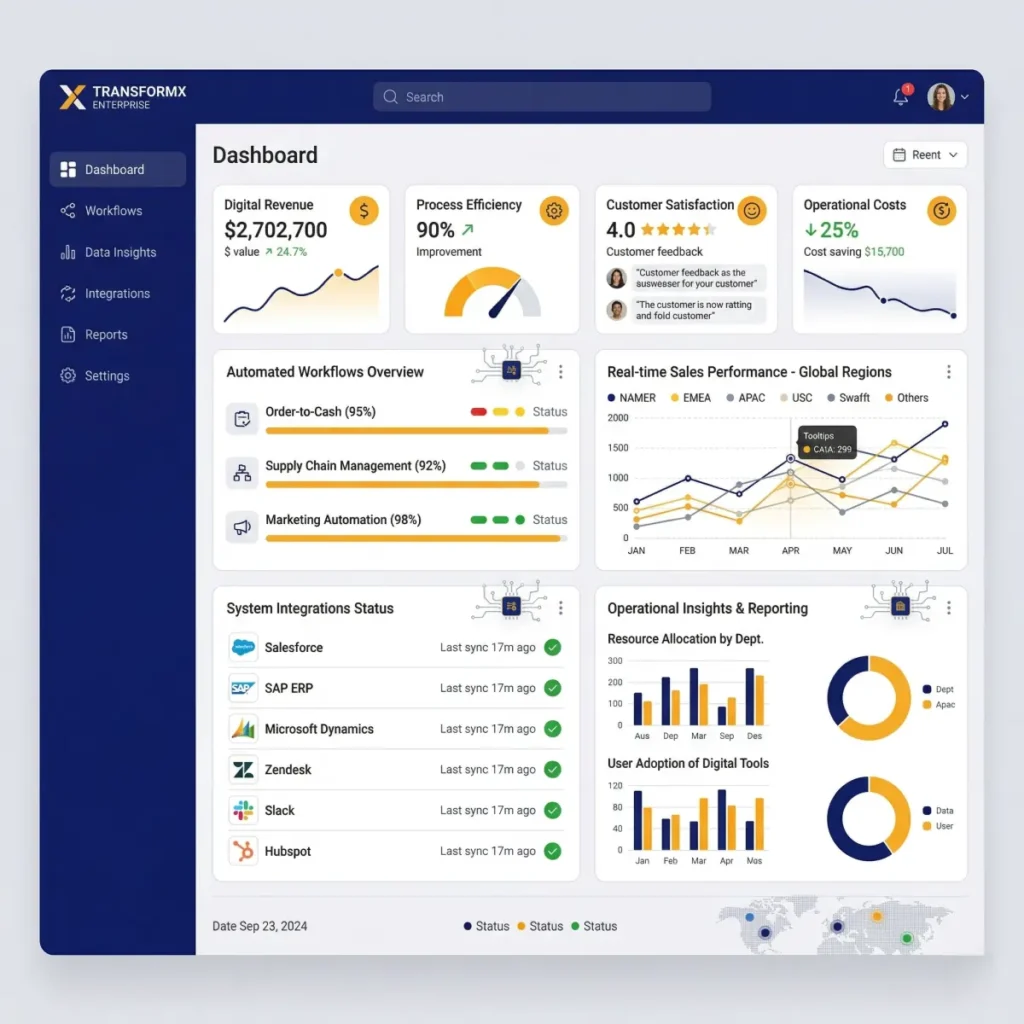
Custom dashboards were developed, systems were integrated using API integrations, and automated reporting processes were deployed to replace manual workflows.
Phase 4: Optimization & Scaling
Performance was monitored through dashboards, workflows were optimized, and additional automation layers were added to support business growth.
Results Achieved
- 40% faster reporting time
- 30% reduction in operational costs
- Real-time data visibility across departments
- Significant reduction in manual work
A structured digital transformation roadmap allowed the company to move from reactive operations to a proactive, data-driven system—resulting in improved efficiency, scalability, and long-term growth.
Businesses looking to achieve similar results can benefit from a structured approach supported by experienced digital transformation services.
Tools Used in a Digital Transformation Roadmap
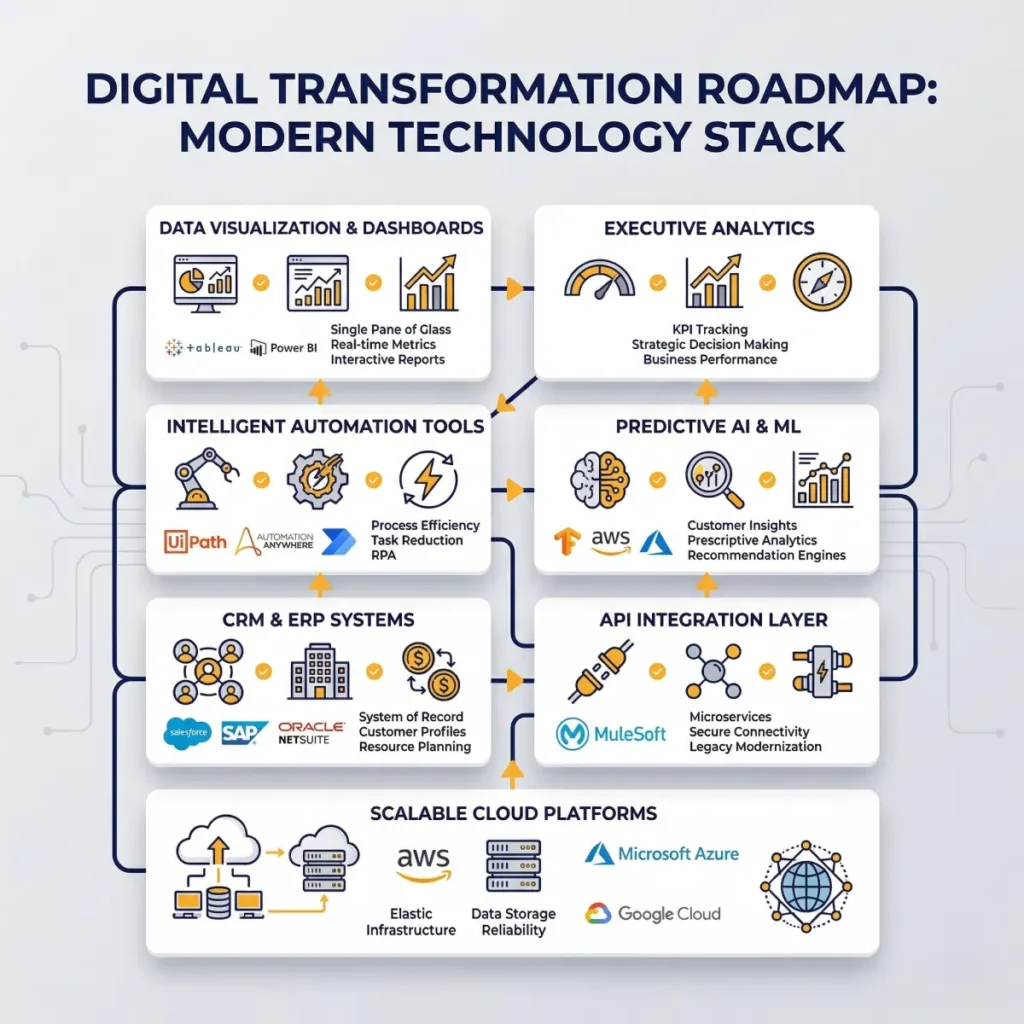
A successful digital transformation roadmap is supported by the right combination of technologies. Choosing the appropriate tools ensures seamless integration, efficient workflows, and scalable systems that grow with your business.
While the exact tools may vary depending on the industry and business size, most transformation strategies rely on the following core technology categories:
1. Cloud Platforms
Cloud infrastructure provides the foundation for scalable and flexible systems. Platforms like AWS, Microsoft Azure, and Google Cloud enable businesses to store data, run applications, and scale operations without heavy upfront infrastructure costs.
2. Automation Tools
Automation tools help eliminate repetitive manual tasks and improve efficiency. These tools streamline workflows, reduce human error, and accelerate business processes through business automation solutions.
3. API Integrations
APIs allow different systems and tools to communicate with each other. Proper API integrations ensure smooth data flow between platforms such as CRM systems, ERP tools, and custom applications.
4. Analytics & Reporting Dashboards
Data-driven decision-making is a key part of digital transformation. Analytics tools and dashboards provide real-time insights into operations, performance, and customer behavior.
5. CRM & ERP Systems
Customer Relationship Management (CRM) and Enterprise Resource Planning (ERP) systems centralize business operations, improve collaboration, and enhance customer experience across departments.
6. AI & Machine Learning Tools
Artificial intelligence enhances automation, predictive analytics, and personalization. AI-powered systems help businesses optimize processes, forecast trends, and improve decision-making.
Businesses looking to achieve similar results can benefit from a structured approach supported by experienced digital transformation services.
Common Digital Transformation Roadmap Mistakes to Avoid
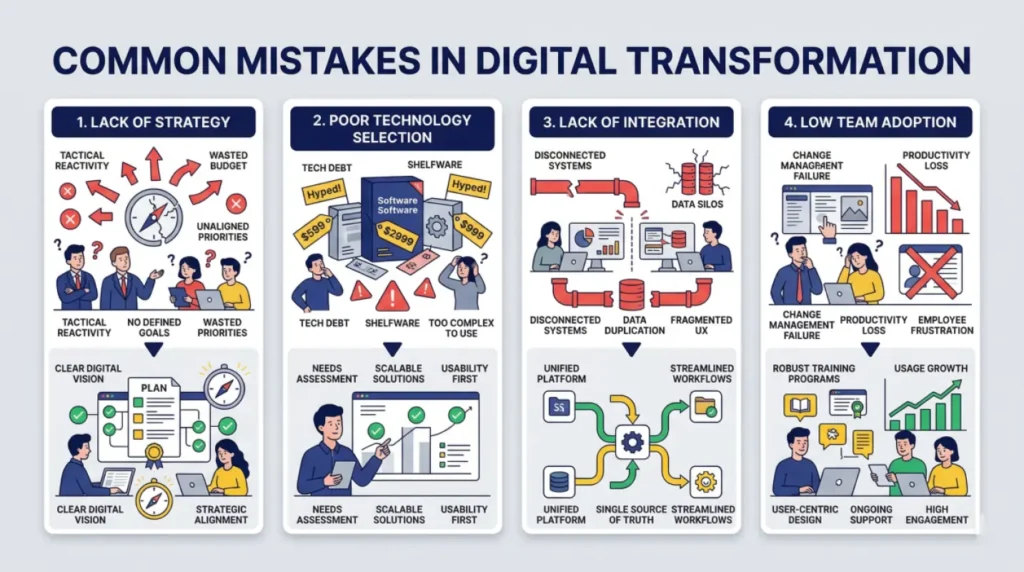
While digital transformation offers significant benefits, many businesses fail to achieve the desired results due to poor planning, incorrect technology choices, or lack of execution clarity. Avoiding these common mistakes can save time, reduce costs, and ensure a smoother transformation journey.
1. Starting Without Clear Goals
Many organizations begin digital transformation without defining clear objectives. Without measurable goals, it becomes difficult to track progress or evaluate success.
👉 Define clear KPIs such as cost reduction, process efficiency, or revenue growth before starting your roadmap.
2. Choosing Technology Too Early
Selecting tools before understanding business needs often leads to unnecessary complexity and poor system alignment.
👉 Focus on business requirements first, then choose technologies that support your goals through a structured roadmap.
3. Ignoring Employee Adoption
Even the best systems fail if teams are not properly trained or resistant to change.
👉 Invest in training, onboarding, and change management to ensure smooth adoption across departments.
4. Lack of Integration Between Systems
Disconnected tools create data silos and reduce operational efficiency.
👉 Use proper API integrations and connected systems to ensure seamless data flow across platforms.
5. Treating Transformation as a One-Time Project
Digital transformation is not a one-time effort—it requires continuous improvement and scaling.
👉 Adopt a long-term mindset with ongoing optimization and performance tracking.
Avoiding these mistakes ensures that your digital transformation roadmap remains aligned with business goals, delivers measurable results, and supports sustainable growth over time.
ROI of a Digital Transformation Roadmap
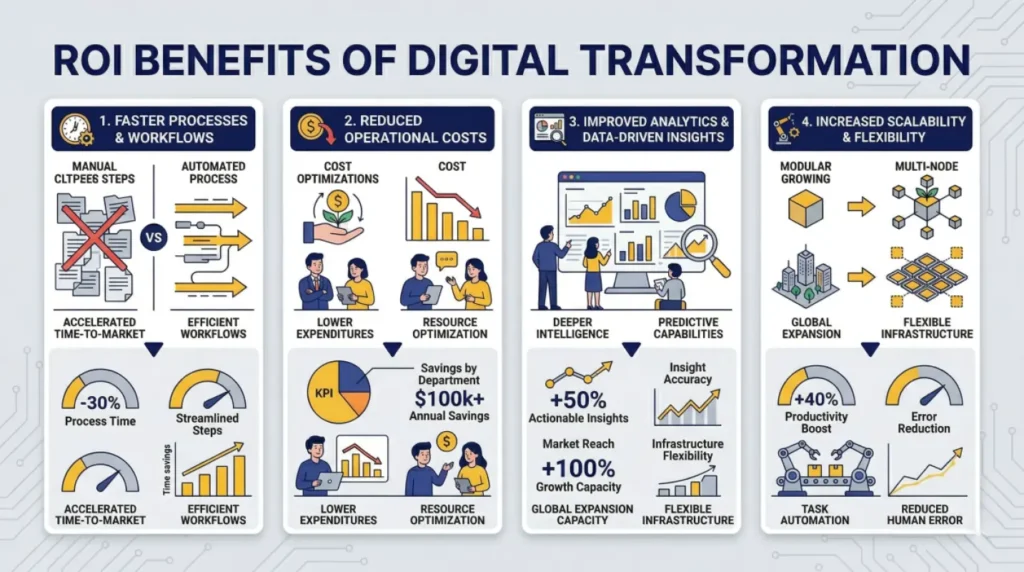
A well-executed digital transformation roadmap delivers measurable business outcomes—not just technical improvements. By aligning strategy with execution, businesses can reduce operational inefficiencies, improve productivity, and unlock new growth opportunities.
Instead of investing blindly in technology, a structured roadmap ensures that every step contributes to real return on investment (ROI).
Key Benefits and ROI Impact
⏱️ Faster Operational Processes
Automation and system integration reduce manual tasks, allowing teams to complete processes significantly faster and focus on high-value activities.
💰 Reduced Operational Costs
Eliminating inefficiencies and redundant workflows leads to lower labor costs, fewer errors, and better resource utilization.
📊 Improved Data Visibility & Decision-Making
Real-time dashboards and analytics provide actionable insights, helping businesses make faster and more informed decisions.
📈 Scalable Growth Infrastructure
With cloud-based systems and connected tools, businesses can scale operations without major disruptions or additional overhead.
⚙️ Increased Efficiency Through Automation
Automation reduces dependency on manual processes, improving consistency, accuracy, and overall operational efficiency.
Frequently Asked Questions About Digital Transformation Roadmaps
What is a digital transformation roadmap?
A digital transformation roadmap is a structured plan that outlines how a business will adopt modern technologies to improve operations, automate processes, and achieve long-term growth. It defines priorities, timelines, and key initiatives required for successful transformation.
Why is a digital transformation roadmap important?
A roadmap provides clarity and direction, ensuring that digital initiatives align with business goals. It helps reduce inefficiencies, avoid costly mistakes, and maximize return on investment by following a structured approach.
What are the key phases of a digital transformation roadmap?
A typical roadmap includes four main phases: assessment and audit, strategy and planning, implementation and integration, and optimization and scaling. Each phase ensures a smooth transition from current systems to modern digital operations.
How long does digital transformation take?
The timeline depends on the size and complexity of the business. Small to mid-sized transformations can take a few months, while large enterprise-level transformations may take 12–24 months or more.
What technologies are used in digital transformation?
Common technologies include cloud platforms, automation tools, API integrations, analytics dashboards, CRM/ERP systems, and AI-powered solutions. The exact tools depend on business requirements and goals.
Is digital transformation suitable for small businesses?
Yes, digital transformation is highly beneficial for small businesses. It helps improve efficiency, reduce manual work, and create scalable systems that support growth without increasing operational complexity.
What is the difference between a digital transformation roadmap and strategy?
A strategy defines the overall vision and goals, while a roadmap translates that strategy into actionable steps, timelines, and implementation phases.
How can Softifyme help with digital transformation?
Softifyme provides end-to-end digital transformation services, including roadmap planning, automation implementation, system integration, and scalable software development tailored to business needs.
Ready to Build Your Digital Transformation Roadmap?
A well-defined roadmap is the first step toward building efficient, scalable, and future-ready systems. Whether you’re looking to automate workflows, integrate platforms, or develop custom digital solutions, having the right strategy makes all the difference.
At Softifyme, we help businesses design and implement transformation roadmaps that deliver measurable results—from reducing manual processes to improving operational efficiency and driving growth.
- A clear, step-by-step transformation roadmap
- Automation opportunities tailored to your business
- Technology recommendations aligned with your goals
- Scalable systems designed for long-term growth

Pingback: Digital Transformation Scale Agile Solutions: Complete Enterprise Guide